
Beyond the Blue Links: Winning Visibility in AI Search
In the age of AI, visibility isn’t just about ranking—it’s about being citation-worthy.
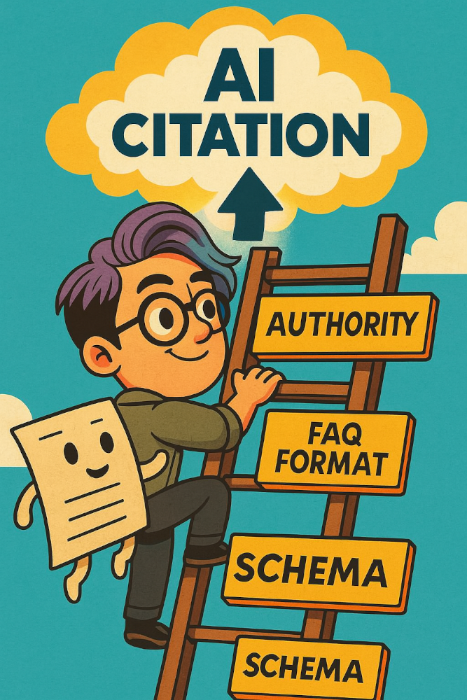
The way people find information online is shifting quickly. With AI assistants like ChatGPT, Gemini, and Perplexity, it’s no longer just about climbing Google’s rankings. Instead of showing a list of links, these platforms deliver direct answers—usually pulling from a handful of trusted sources.
That said, Google is still the heavyweight. Almost every ChatGPT user (about 95%) also uses Google in the same month. But the reverse isn’t true—only around 14% of Google users also use ChatGPT.
Right now, marketers are still figuring out exactly where AI-generated answer platforms fit alongside traditional search. What’s clear, though, is that content still matters—it just needs to be created and structured in ways that make it easy for both people and machines to recognize as credible and useful.
Which brings us to the big question: How do you make sure your content gets cited in AI-generated answers?
Before we dive into tactics, here’s a snapshot of how major AI platforms are performing globally and in the UK.
| Platform | Global MAU (approx.) | UK MAU (approx.) | Key Notes |
| ChatGPT | 542 million | ~28 million | Dominates UK usage; includes Microsoft Copilot |
| Gemini (Google) | 400 million | ~12 million | Strong mobile presence; UK launch of AI Mode in July |
| Claude.ai | 356 million | ~600K | Web usage growing; mobile flat |
| Grok (xAI) | 178.6 million | ~1.2 million | UK usage stable; peaked globally in March |
| DeepSeek AI | ~62 million | Not specified | Declining globally; no UK-specific data |
| Perplexity AI | 15 million | ~250K | Fast growth in Asia; niche UK presence |
| Google AI Mode | 100 million+ | Just launched in UK | UK rollout began 28 July 2025 |
1. Understand How AI Chooses Sources
Unlike traditional search engines, AI assistants don’t just pull from the top 10 blue links. Instead, they:
- Look for structured, authoritative content they can parse easily.
- Prefer content that directly answers questions in natural language.
- Cite sources that carry strong credibility signals.
Platform Preferences: What Gets Cited Varies While AI assistants share similar goals—delivering fast, trustworthy answers—they don’t all cite the same sources. Each platform has its own citation habits shaped by its training data, partnerships, and technical architecture:
- ChatGPT (via Bing) tends to cite high-authority domains like government sites, educational institutions, and major media outlets. Reddit and Wikipedia are also frequently referenced, especially for community-driven or explanatory content.
- Gemini (Google) leans heavily on Google-indexed content and often favors sites with strong SEO signals, structured data, and mobile optimization. YouTube and Google-owned properties are common citations.
- Perplexity AI is more transparent with citations and often surfaces niche blogs, academic papers, and real-time news sources. It’s particularly strong in tech and science queries.
- Claude.ai and Grok show less consistent citation behavior but frequently reference Wikipedia, Reddit, and popular media. Claude tends to favor clean, well-written content with clear authorship.
These preferences shift depending on the query type—whether it’s technical, medical, product-related, or conversational. What’s cited today may change tomorrow as platforms evolve, making it essential to structure your content for both clarity and credibility.
2. Use Schema Markup to Structure Your Content
Schema markup helps AI models “understand” your content more clearly.
- Implement FAQ schema for Q&A pages.
- Use HowTo schema for tutorials.
- Apply Product, Review, and Article schema where relevant.
Structured data ensures your content isn’t just crawled—it’s interpreted correctly, making it more likely to be cited as a trusted answer.
A lot of trusted platforms like WordPress and Shopify are pretty good at the basics for schema but you will need to go further – installing plugins or developing a bit of code to keep on top of more specific schema types.
3. Write in FAQ and Natural Language Formats
AI assistants thrive on clear, question-and-answer formatting.
- Create FAQ-style content that directly addresses common queries in simple, conversational language.
- Use subheadings like “What is…?”, “How do I…?”, and “Why does…?”.
- Avoid jargon-heavy walls of text—focus on readability and clarity.
This makes your content ‘citation-ready’ for AI-generated responses.
4. Build Authority Signals That AI Can Recognize
AI systems prioritize content that appears trustworthy. To boost your chances:
- Get high-quality backlinks from authoritative sites.
- Display clear author expertise (bios, credentials, LinkedIn links).
- Keep content up to date with regular refreshes.
- Ensure your site has strong E-E-A-T (Experience, Expertise, Authoritativeness, Trustworthiness) signals.
The more authoritative your content looks to both humans and machines, the more likely AI will trust it.
5. Think Beyond Google Rankings
The biggest shift here: being ranked on Google doesn’t guarantee visibility in AI answers.
Instead of just optimizing for search engines, optimize for machines that summarize, contextualize, and cite.
6. Things to Keep in Mind & Caveats
- Many “ChatGPT prompts” are not strictly equivalent to search queries. They might be for content creation, ideation, or conversational purposes, which may not lead to the same kind of “search intent.”
- Definitions vary: what counts as a “search-like prompt” or “AI chat tool use” differ between studies. That means direct comparisons can sometimes be apples vs oranges.
- Not all metrics disaggregate which portion of traffic or queries lead to discovery vs. deeper interactions vs. commercial outcomes. So even if AI reduces clicks, we don’t always know what that means for business metrics (like leads or conversions).
- The data is rapidly evolving — what was true 6-12 months ago may already be shifting due to changes in product features, user behavior, or how search engines display AI Overviews or summaries.
Final Takeaway
AI assistants are rewriting the rules of content visibility. If your brand isn’t showing up in AI-generated answers, it’s not because your content isn’t good—it’s because it isn’t structured, formatted, or authoritative enough to be cited.
Now is the time to rethink your content strategy with schema markup, natural language formatting, and authority building at the core.
In the age of AI, visibility isn’t just about ranking—it’s about being citation-worthy. Structure smart, write clearly, and build trust.
Audit your content today. Look at your top-performing pages and ask:
- Is it structured with schema markup?
- Does it answer questions in natural language?
- Does it show clear author expertise and trust signals?
In the age of AI, being helpful isn’t enough—you need to be recognizable and credible to machines. Structure smart. Write clearly. Build trust. That’s how you earn your place in the answers.